


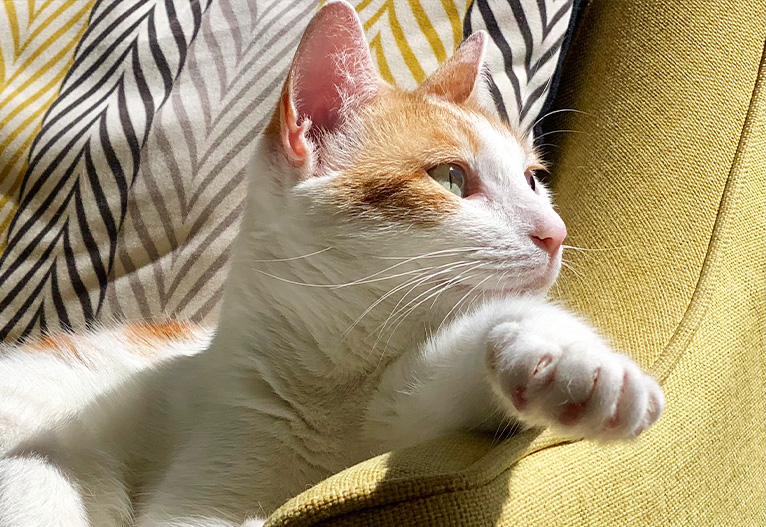


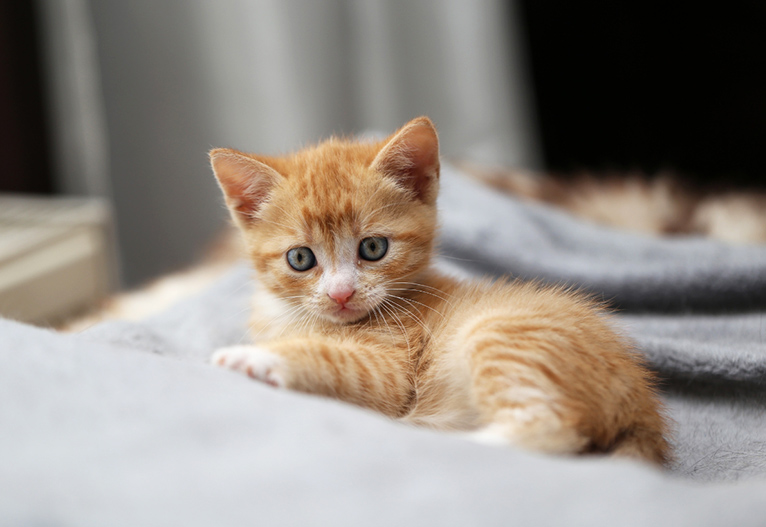

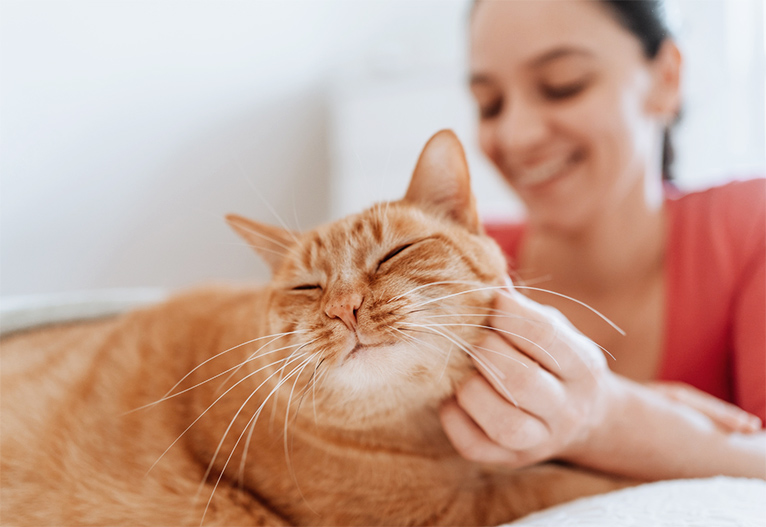

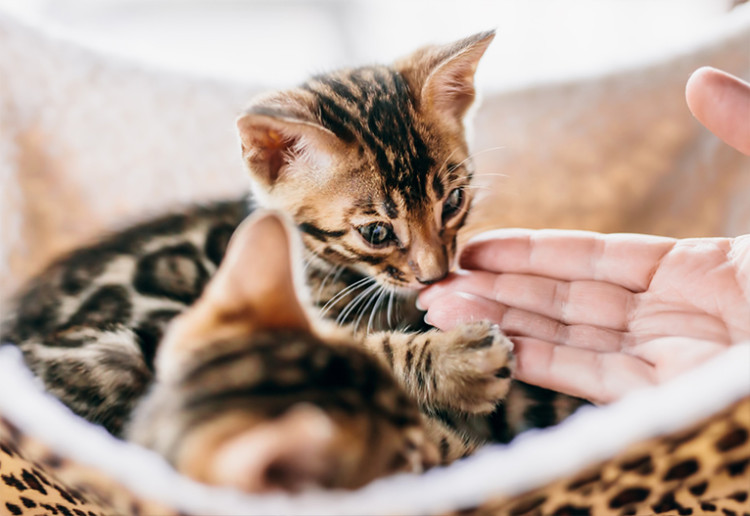

Ever wonder if your cat could pick you out of a line up?
New research suggests they could … but maybe not in the way you would expect.
Previous research has found that only 54% of cats could recognise humans by their face alone.
So how does your cat know it’s you?
Studying the sniff
A new study published today in PLOS One suggests your cat can recognise you by your smell. This feat has not been studied before and may reveal another layer of depth within cat-human bonds.
Cats often get a bad rap for being aloof or uncaring about the people in their lives, but a growing number of studies are finding the opposite to be true. We now know that cats learn the names we give them, cats and their guardians form their own communication style, and most cats will pick human social interaction over food, a choice even dogs struggle with.
And now, thanks to this most recent study, we know that cats can identify their people by smell, something they also rely on to identify their close feline social groups.
The study, by Yutaro Miyairi and colleagues at Tokyo University of Agriculture, investigated the ability of 30 cats to differentiate between their guardian and an unknown person based on scent alone.
Cats in the study were presented with a plastic tube containing swab samples from under the armpit, behind the ear and between the toes of either the cat’s guardian or of a human they had never met. As a control, cats were also presented with an empty plastic tube.
The results?
Cats in the study spent longer sniffing the scent of an unknown person compared to the scent of their guardian or the empty tube.
A shorter sniffing time suggests that when cats came across the smell of their guardian, they recognised it quickly and moved along. But when they came to the swabs from an unknown person, the cat sniffed longer, using their superior sense of smell to gather information about the scent.
Similar patterns have been observed previously, with kittens sniffing the odour of unknown female cats longer than the odour of their own mother, and adult cats sniffing the faeces of unfamiliar cats longer than those within their social group.
The findings of this new study may indicate that we, too, are in our cats’ social circle.
The brain and the nose
The study also found a tendency for cats to sniff familiar scents with their left nostril, while unknown scents were more often sniffed using their right. But when cats became familiar with a scent after sniffing for a while, they switched nostrils from the right to the left.
While this may sound like an odd finding, it’s a pattern that has also been observed in dogs. Current research suggests this nostril preference may indicate that cats process and classify new information using their right brain hemisphere, while the left hemisphere takes over when a routine response is established.
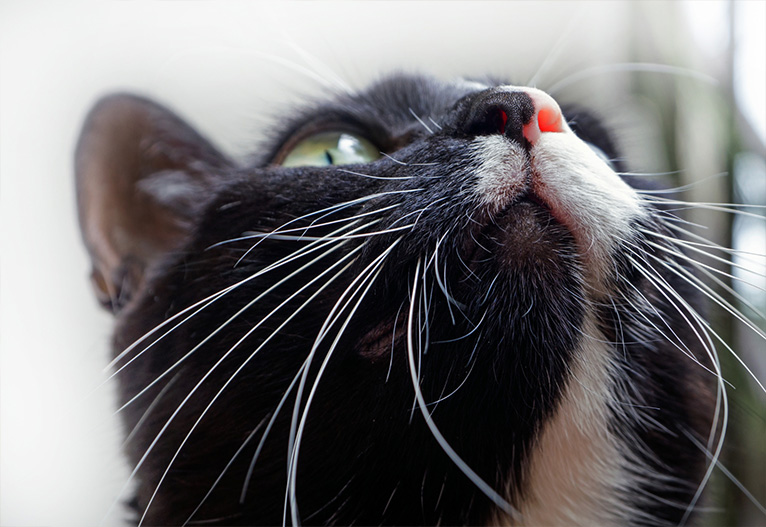
Why scent?
Cats rely on scent to gather information about the world around them and to communicate.
Scent exchange (through cheek-to-cheek rubbing and grooming each other) is used as a way to recognise cats in the same social circle, maintain group cohesion, and identify unfamiliar cats or other animals that may pose a threat or need to be avoided.
Familiar scents can also be comforting to cats, reducing stress and anxiety and creating a sense of security within their environment.
When you come back from a holiday, if you notice your cat being distant and acting like you’re a total stranger, it might be because you smell like one. Try taking a shower using your usual home products and put on some of your regular home clothing. The familiar scents should help you and your cat settle back into your old dynamic sooner.
And remember, if your cat spends a lot of time sniffing someone else, it’s not because they prefer them. It’s likely because your scent is familiar and requires less work. Instead of being new and interesting, it might do something even better: help your cat feel at home.
Julia Henning, PhD Candidate in Feline Behaviour, School of Animal and Veterinary Science, University of Adelaide
This article is republished from The Conversation under a Creative Commons license. Read the original article.
-

-
-
TraceyGail, NSW
- 17 Nov 2025
👍
0 Likes
-
-
-
ChiWren, QLD
- 26 Oct 2025
👍
0 Likes
-

-
-
BP517428, NSW
- 31 Aug 2025
👍
0 Likes
-

-
-
NewfieMum, QLD
- 31 Aug 2025
👍
0 Likes
-

-
-
sars_angelchik, TAS
- 27 Aug 2025
👍
0 Likes
-

-
-
BH516536, TAS
- 23 Aug 2025
👍
0 Likes
-

-
-
ChiWren, QLD
- 22 Aug 2025
👍
0 Likes
-

-
-
BH516394, WA
- 22 Aug 2025
👍
0 Likes
-

-
-
Myfurrloves, NSW
- 09 Aug 2025
👍
0 Likes
-

-
-
NewfieMum, QLD
- 09 Aug 2025
👍
0 Likes
-

-
-
Chels, SA
- 08 Aug 2025
👍
0 Likes
-

-
-
BH516518, VIC
- 07 Aug 2025
👍
0 Likes
Post a commentTo post a review/comment please join us or login so we can allocate your points.